ERP vs CRM: What Your Business Actually Needs First

One of the most common questions we get from growing US businesses is some version of: 'Should we buy an ERP or a CRM first?' The confusion is understandable — both categories overlap in marketing copy, both promise a single source of truth, and both can cost six figures if you're not careful. But they solve fundamentally different problems, and buying them in the wrong order is one of the most expensive mistakes a scaling company can make.
The simplest possible definition
A CRM (customer relationship management system) manages everything that happens before and around revenue: leads, deals, customers, support tickets, and marketing campaigns. An ERP (enterprise resource planning system) manages everything that happens inside your business to produce and deliver value: finance, inventory, procurement, manufacturing, HR, and supply chain.
Or put another way: CRM helps you sell more. ERP helps you operate profitably.
Quick comparison
| Dimension | CRM | ERP |
|---|---|---|
| Primary user | Sales, marketing, support | Finance, ops, supply chain |
| Core question | Who are our customers? | How are we operating? |
| Typical first-year cost | $5k–$50k | $25k–$500k+ |
| Time to value | Weeks | 6–18 months |
| Buy first if... | Revenue is inconsistent | Ops complexity is choking growth |
Which do you actually need first?
For most companies under $10M in revenue, the answer is CRM first — almost always. The friction that limits your growth at that stage is nearly always in the go-to-market motion, not in operations. QuickBooks Online plus a well-run CRM will carry a services or software business remarkably far.
The exception is companies where operational complexity is the bottleneck: inventory-heavy retailers, manufacturers, distributors, and businesses with complex project accounting. If you're managing physical goods across multiple warehouses, ERP is not optional — it's foundational infrastructure.
When you'll eventually need both
Most companies past $25M in revenue run both, integrated. The customer data lives in the CRM, the financial and operational truth lives in the ERP, and a middleware layer keeps them in sync. Modern ERPs like NetSuite, Acumatica, and Odoo increasingly ship native CRM modules that are good enough for small teams, but companies with dedicated sales orgs almost always run a best-of-breed CRM alongside.
Can one tool do both?
Sort of. NetSuite, Odoo, and Zoho One include both, but the CRM modules are usually weaker than standalone products like HubSpot or Salesforce.
How much does a mid-market ERP cost?
Expect $50k–$250k in year-one all-in costs (licenses + implementation) for a 50–200 person company on NetSuite or Acumatica.
What's the fastest ERP to implement?
For small businesses, Odoo and Zoho Books can be live in weeks. Full mid-market ERPs realistically take 4–9 months regardless of vendor claims.
Don't buy an ERP because it feels grown-up. Buy it when operational chaos is measurably costing you more than the software will.
Reader reviews
What US professionals said after reading this article.
Serena O.
Director of Finance, 50-person Medical Device Manufacturer · San Diego, CA
Navigating software transitions feels overwhelming when your accounting team is stuck in spreadsheets. We were debating whether to overhaul our back-office systems or focus on lead tracking. This breakdown of how ERP handles the operational side versus the customer-facing aspects helped me realize we need the structural foundation first. It clarifies the mid-market overlap that usually results in redundant software costs.
Ricardo R.
Founder, 4-location Commercial Landscaping Group · Columbus, OH
Deciding which system to implement first has been a bottleneck for our expansion plans this year. My sales team is pushing for better client tracking, but our warehouse operations are lagging behind. The section on when to prioritize CRM for immediate revenue growth resonates with our current situation. We have decided to postpone the full ERP rollout until our sales pipeline is more predictable.
Chris V.
RevOps Manager, Series B Logistics Platform · Tacoma, WA
Most comparisons ignore the technical debt that occurs when SMBs choose the wrong path. The explanation regarding how these two tools overlap during the growth phase is accurate to what we experienced last quarter. We spent too much time trying to make our CRM handle inventory management. This advice confirms that separate, integrated instances would have saved our engineering team significant manual labor.
Monica H.
COO, Regional Wholesale Distributor · Miami, FL
Operational efficiency is our top priority as we scale beyond twenty employees. We previously struggled to understand why our current software felt insufficient for our specific supply chain needs. The distinction made between front-end relationship management and back-end resource planning is clear and practical. It provided the exact framework my board needed to approve our upcoming investment in a comprehensive ERP solution.
Kirk P.
VP of Sales, Enterprise SaaS Provider · Des Moines, IA
Software selection often becomes a political battle between the sales department and the finance office. Seeing the specific criteria for which tool an SMB should buy first helps settle those internal debates. We were leaning toward a unified suite, but the analysis of specialized CRM benefits changed my mind. Now we can focus on closing deals without the unnecessary complexity of a full-scale system.
Related articles

The 2026 Buyer's Guide to Choosing Business Tools That Actually Stick
 By CRMWorldGuide Editorial • July 8, 2026
Most SaaS purchases get abandoned within 12 months. Here's the buying framework that has kept our clients' adoption rates above 80%.
Read More →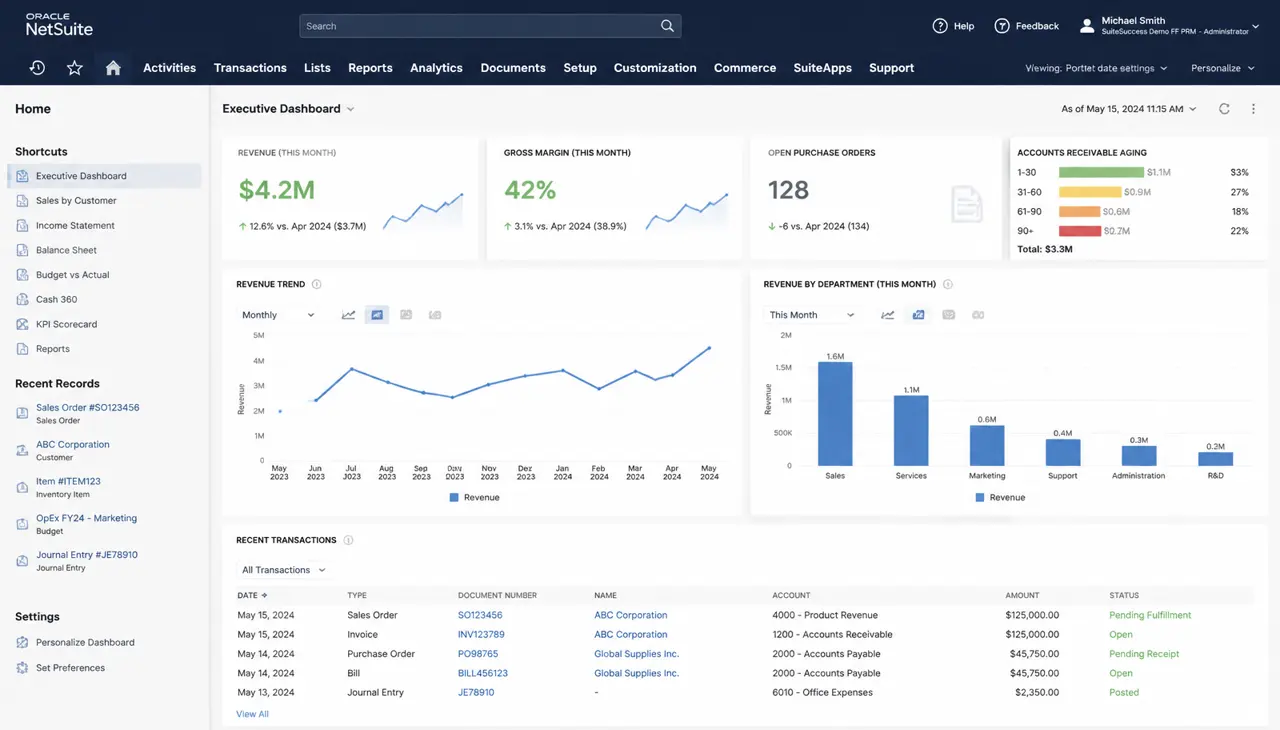
NetSuite vs Odoo 2026: Which ERP Fits Your Growing Business?
By CRMWorldGuide Editorial • July 8, 2026NetSuite is the corporate default. Odoo is the modular challenger. Which one should you buy in 2026?
Read More →Acumatica ERP Review 2026: The Cloud ERP Challenger Worth Watching
By CRMWorldGuide Editorial • July 8, 2026Acumatica's consumption-based pricing and modern architecture are winning over mid-market buyers who want NetSuite depth without NetSuite lock-in.
Read More →