NetSuite vs Odoo 2026: Which ERP Fits Your Growing Business?
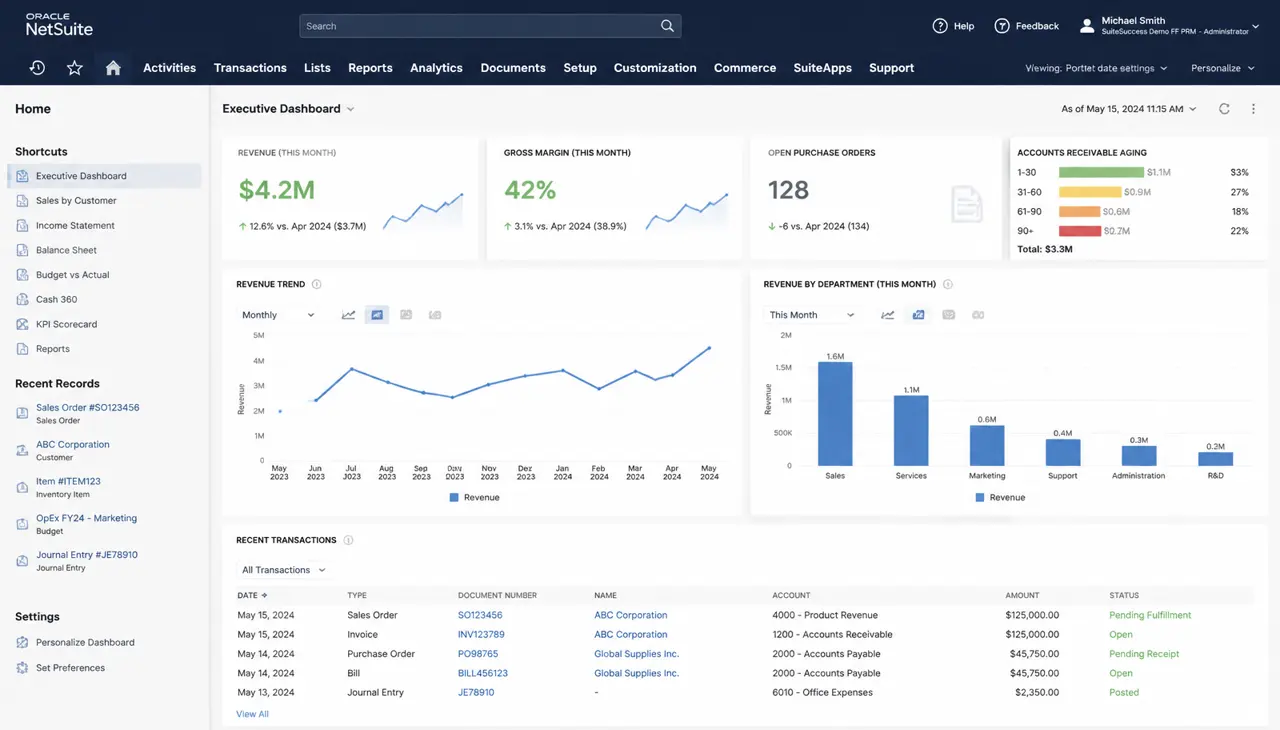
Selecting a foundational Enterprise Resource Planning (ERP) platform in 2026 is no longer just about back-office accounting; it is about building a scalable digital nervous system for your business. For US-based mid-market firms and rapidly scaling startups, the choice often narrows down to two titans that represent fundamentally different philosophies: Oracle NetSuite and Odoo. NetSuite remains the industry benchmark for integrated cloud financials, offering a unified, 'single source of truth' that has powered IPOs for decades. Conversely, Odoo has disrupted the traditional ERP landscape with its modular, open-source architecture and a pricing model that aggressively undercuts legacy providers. This review dissects their workflows, hidden costs, and operational nuances to help decision-makers determine which platform aligns with their 2026 strategic objectives.
The Cost of Scaling: 2026 Pricing Realities
Pricing for these two systems remains the most polarizing point of comparison. NetSuite adheres to a traditional enterprise luxury model, where the final price is often the result of complex negotiations involving base platform fees, user licenses, and various functional 'modules' like SuiteCommerce or Advanced Inventory. In 2026, we are seeing NetSuite lean harder into long-term contracts with steep implementation costs. Odoo, meanwhile, has simplified its approach to a 'per-user' all-in model for its Enterprise Edition, though the real cost often lies in third-party implementation partners and server management. While Odoo appears significantly cheaper on paper, enterprise-grade deployments requiring high customization can see the price gap narrow when accounting for maintenance and specialized development resources.
| Feature | Oracle NetSuite (2026 Est.) | Odoo Enterprise (2026 Est.) |
|---|---|---|
| Base Platform Fee | $999+ /month | $0 (Included in user price) |
| Cost per User | $99 - $130 /month | $24.90 - $35.00 /month |
| Implementation | $25k - $150k+ | $5k - $60k+ |
| Module Charges | A la carte (Expensive) | All modules included |
NetSuite: The Gold Standard for Financial Integrity
NetSuite’s greatest asset in 2026 remains its bulletproof financial consolidation engine. For companies managing multiple subsidiaries across different tax jurisdictions or those eyeing an exit strategy, NetSuite’s OneWorld module handles currency fluctuations and global compliance better than almost any platform at this price point. The system is designed with rigorous audit trails and GAAP compliance at its core, making it the preferred choice for CFOs who need to provide transparency to board members and investors. Beyond accounting, NetSuite offers a deeply integrated CRM and high-end inventory management features like warehouse management systems (WMS) and demand planning that are natively built into the same database, eliminating the data silos that often plague growing organizations.
- Unrivaled financial consolidation for multi-entity international businesses.
- A vast ecosystem of 'SuiteApps' that ensure native compatibility without custom coding.
- Built-in Business Intelligence (SuiteAnalytics) that provides real-time KPI dashboards.
- Highly reliable, SOC-compliant infrastructure with 99.9% uptime guarantees.
- Superior revenue recognition tools for SaaS and subscription-based business models.
- Strong standardized workflows that enforce internal controls and prevent fraud.
Odoo: Flexibility and User Experience Innovation
While NetSuite feels like an enterprise tool, Odoo feels like modern software. Its interface is clean, intuitive, and remarkably fast, which significantly lowers the barrier to employee adoption. In 2026, Odoo's strength lies in its modularity; you can start with a simple CRM and invoicing tool and gradually add manufacturing (MRP), e-commerce, or project management as your operations mature. This 'Lego-block' approach allows for surgical precision in how you build your tech stack. Furthermore, Odoo Studio allows non-technical users to build custom apps and fields on the fly, a feat that would require expensive SuiteScript developers in the NetSuite environment. For companies with unique, non-standard business processes, Odoo’s open-source roots offer a level of malleability that proprietary systems simply cannot match.
- The best value-to-feature ratio in the current ERP market.
- High degree of customization through the Odoo Studio and open-source codebase.
- Modern, web-native UI that works seamlessly across mobile and desktop devices.
- Integrated Marketing Suite including email automation, social media, and SEO tools.
- Rapid deployment cycles for small to mid-sized implementations.
- Active global community resulting in thousands of third-party apps and fixes.
The Trade-offs: Hidden Limitations
No ERP is perfect, and both NetSuite and Odoo present significant challenges that often emerge six months after implementation. NetSuite caters to a specific way of doing business; if your workflow doesn't align with 'The NetSuite Way,' you will find yourself paying astronomical fees for customizations that may break during the platform's bi-annual updates. On the other hand, Odoo’s greatest weakness is its lack of 'guardrails.' Because it is so flexible, it is very easy for an inexperienced team to over-customize the system, leading to a tangled mess of code that makes future upgrades difficult. Furthermore, Odoo's financial module, while much improved in 2026, still lacks the deep audit-readiness and complex consolidation features that larger, publicly traded firms require.
- NetSuite: High 'vender lock-in' and unpredictable renewal price hikes.
- NetSuite: Steep learning curve for administrative staff and lengthy training requirements.
- Odoo: Quality of support is inconsistent, often requiring a dedicated third-party partner.
- Odoo: Version upgrades (e.g., v18 to v19) can be labor-intensive if many customizations exist.
- Odoo: Financial reporting lacks the depth required for high-level regulatory compliance.
- NetSuite: Reporting and searching (Saved Searches) requires technical logic and time to master.
Integration Ecosystem and Third-Party Connectivity
In the 2026 business environment, an ERP is only as good as its ability to talk to other software. NetSuite boasts the 'SuiteCloud' platform, which is a mature ecosystem where developers build ready-made integrations for common US tools like Salesforce, HubSpot, and various 3PL providers. These are usually robust but come with a 'SuiteApp' license fee. Odoo takes a more 'wild west' approach. There is an integration for almost everything, often available through the Odoo App Store for a nominal one-time fee. However, the quality of these integrations varies wildly. While Odoo easily connects with Shopify or Amazon, connecting it to specialized US banking or payroll systems (like ADP or Gusto) often requires more manual configuration compared to NetSuite’s plug-and-play connectors.
Ideal Use Cases: Who Should Choose What?
The choice between NetSuite and Odoo often comes down to the complexity of your financial needs versus the uniqueness of your operational needs. If you are a high-growth startup planning for an IPO, or a wholesale distributor with high-volume international transactions, NetSuite is the safer, albeit more expensive, bet. Its mature compliance framework is an insurance policy for your data integrity. Conversely, Odoo is the winner for localized manufacturing, niche retail, or creative agencies that want a high-performance ERP that can be molded to fit their specific workflow without spending six figures on licensing. If you have an in-house IT team that can manage a Linux-based environment or work with Python, Odoo provides a level of control and ROI that NetSuite cannot touch.
Head-to-Head Comparison
| Comparison Factor | Winner: NetSuite | Winner: Odoo |
|---|---|---|
| Financial Reporting | X (Unmatched depth) | |
| Ease of Use | X (Modern and intuitive) | |
| Flexibility | X (Open source flexibility) | |
| Total Cost of Ownership | X (Drastically lower) | |
| Inventory Management | X (Enterprise scale) | |
| Manufacturing (MRP) | X (Visual and flexible) |
Frequently Asked Questions
Can Odoo handle multi-currency and global consolidations?
Odoo can manage multiple currencies and basic parent-company reporting, but it lacks the automated intercompany elimination and advanced tax engines found in NetSuite OneWorld. It is suitable for small international footprints but may struggle with the complex compliance needs of a global conglomerate.
Is NetSuite's price negotiable in 2026?
Yes, NetSuite pricing remains highly negotiable, particularly at the end of fiscal quarters. However, be wary of deep first-year discounts that expire, leading to 20-30% increases upon renewal. Always negotiate your multi-year uplift cap upfront to avoid future budget shocks.
Can you host Odoo yourself to save money?
You can host Odoo Community or Enterprise on your own servers (on-premise) or via Odoo.sh. While this can save on licensing, the costs of server maintenance, security, and backups are then your responsibility. Most US businesses choose Odoo Online for the ease of a managed cloud.
Does NetSuite work well for creative or service-based agencies?
NetSuite has a module called SRP (Service Resource Planning) for project-based businesses. While powerful, many agencies find it overkill and prefer Odoo’s project management tool, which is more visual and integrates better with simple time-tracking and task management for teams.
Is it easy to switch from Odoo to NetSuite later?
Migrating ERPs is never easy. Moving from Odoo to NetSuite is common as companies mature, but it requires a full data extraction and mapping process. It is generally better to choose the system that fits your 5-year growth plan rather than your current 1-year needs.
In 2026, the ERP debate isn't about which software is 'better'—it's about whether your company values a rigid, standardized financial foundation or a flexible, agile operational platform.
The Verdict
In the 2026 landscape, Oracle NetSuite remains the powerhouse for businesses where financial precision and scalability are non-negotiable. It is an investment in a global standard that virtually every auditor and investor respects. However, Odoo has proven that the high cost of entry for ERPs is no longer an absolute requirement. For the middle-market company that prioritizes user experience, rapid iteration, and cost-efficiency, Odoo is no longer just a 'budget alternative'—it is a formidable competitor that, in many cases, offers better day-to-day usability. If your goal is a public listing or heavy international expansion, choose NetSuite. If you are a nimble US enterprise looking to digitize your unique operations without the 'enterprise tax,' Odoo is your champion. Both require a dedicated implementation strategy to succeed, but the gap in their capabilities has never been smaller.
Reader reviews
What US professionals said after reading this article.
Gavin N.
Chief Technology Officer, Mid-market Logistics Group · Charlotte, NC
Navigating the enterprise resource planning landscape feels daunting as we scale past one hundred employees. Your breakdown of Oracle NetSuite as a high-end cloud solution helped clarify why our current QuickBooks setup is failing us. We previously worried about the steep implementation costs mentioned here. However, seeing the long-term ROI comparison for cloud native systems gives my board more confidence in making a transition this fiscal year.
Cara P.
Founder, 5-location Medical Aesthetics Chain · Miami, FL
Deciding between modularity and a single monolithic suite was our biggest hurdle during recent strategy meetings. Your analysis of the Odoo open source model resonates because our clinic staff requires very specific, simplified workflows. Smaller businesses often get priced out of high-tier ERPs early on. This comparison confirms that starting with a few core modules is the more sustainable path for our regional expansion across Florida.
Hector S.
Director of Operations, Industrial Parts Distributor · Brooklyn, NY
Our warehouse team struggles with inventory tracking across multiple sites in the Northeast. Identifying the customization limits between these two platforms proved useful for our technical lead. While NetSuite offers comprehensive features out of the box, the flexibility of a modular system fits our unique supply chain requirements better. We needed this objective look at how licensing fees actually stack up against total cost of ownership over time.
Tina H.
RevOps Manager, Series B SaaS Platform · Hartford, CT
Most comparisons ignore the specific needs of software companies that deal with complex subscription billing. Seeing the distinction between these 2026 versions helped me map out our next three years of growth. We are currently leaning toward the more expensive cloud ERP because our finance department requires standardized compliance reporting. It is refreshing to find a guide that addresses the scalability of different cloud architectures without the typical sales fluff.
Trish L.
Purchasing Manager, Sustainable Apparel Brand · Honolulu, HI
Managing a remote team while coordinating manufacturing overseas requires a robust digital backbone. The section covering the best-fit criteria for growing businesses helped me justify a lower initial investment in software. We found the cheaper price point of modular options appealing since we can add features as our production volume increases. This resource provided the exact data points my CFO requested before we sign a new multi-year software contract.
Related articles

ERP vs CRM: What Your Business Actually Needs First
 By CRMWorldGuide Editorial • July 8, 2026
Founders confuse ERP and CRM constantly. Here's the plain-English difference and how to decide which to buy first.
Read More →
The 2026 Buyer's Guide to Choosing Business Tools That Actually Stick
By CRMWorldGuide Editorial • July 8, 2026Most SaaS purchases get abandoned within 12 months. Here's the buying framework that has kept our clients' adoption rates above 80%.
Read More →Acumatica ERP Review 2026: The Cloud ERP Challenger Worth Watching
By CRMWorldGuide Editorial • July 8, 2026Acumatica's consumption-based pricing and modern architecture are winning over mid-market buyers who want NetSuite depth without NetSuite lock-in.
Read More →