HubSpot Review 2026: Is It Still Worth the Price?
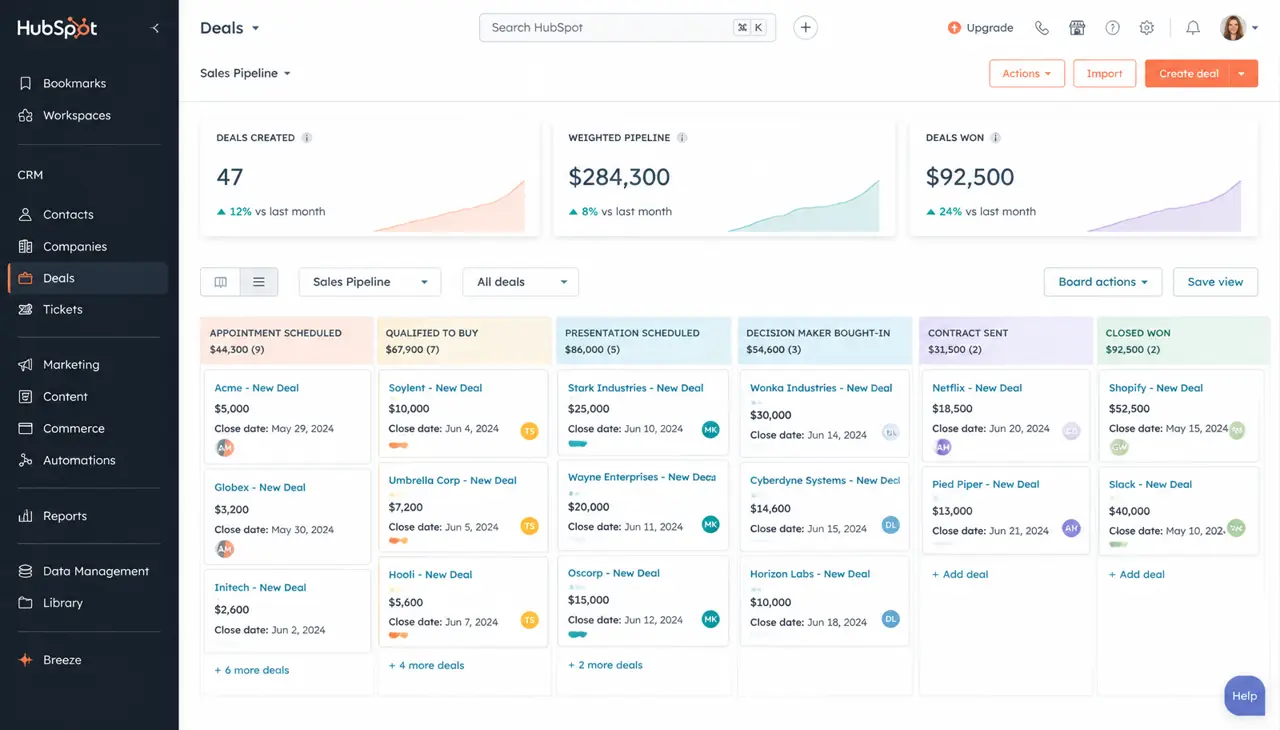
HubSpot has become the default CRM recommendation for US small and mid-market businesses over the last decade. But 2025's pricing reshuffle — which quietly moved several previously-standard features into higher tiers — has made a lot of buyers ask whether the platform is still the value it used to be. We've been running HubSpot live across three real client accounts (a 12-person agency, a 40-person SaaS startup, and an 80-person professional services firm) for the full year, and this review is the result.
What HubSpot gets right
The core CRM is still best-in-class for its price. Contact and company records are cleanly designed, timeline activity capture is automatic and reliable, and the UI is genuinely pleasant to use — a low bar that shockingly few CRMs clear. Email tracking, meeting scheduling, and the mobile app all work without fuss.
The bigger win is how tightly Marketing Hub, Sales Hub, and Service Hub integrate. A lead that fills out a form on your marketing site gets automatically enrolled in a nurture sequence, scored, routed to the right rep, and — once they become a customer — handed to the service team with full historical context. Building the equivalent workflow across Mailchimp + Pipedrive + Zendesk is possible but painful.
Where the pricing bites
| Tier | Price (2026) | What changed |
|---|---|---|
| Free | $0 | Still generous; contact insights limited |
| Starter | $20/seat/mo | Now requires min. 2 seats in most bundles |
| Professional | $890/mo + $50/seat | Marketing contacts now count differently |
| Enterprise | $3,600/mo + $75/seat | Custom objects still Enterprise-only |
The realistic cost for a 15-person team wanting workflow automation, custom reporting, and light marketing is now $1,400–$2,200 per month — roughly 30% higher than the same setup would have cost in 2023.
Hidden costs to plan for
- Marketing contact tiers escalate quickly past 5,000 contacts
- Onboarding fees range from $1,500 (Starter) to $6,000+ (Enterprise) unless waived
- Removing HubSpot branding from forms/emails requires paid tiers
- Advanced reporting requires either Ops Hub or Professional
Who should still buy HubSpot
Content and inbound-driven B2B companies. If your growth motion depends on turning organic and paid traffic into pipeline through nurture, no other platform under $50k/year competes with HubSpot's integrated marketing-to-sales flow.
Who should look elsewhere
Pure outbound sales teams (look at Close or Pipedrive), heavy operations use cases (look at NetSuite or Odoo), and price-sensitive teams under 10 people (look at Zoho or the HubSpot free tier alone).
Is HubSpot's free CRM actually free?
Yes, permanently free for unlimited users with core CRM functionality. It becomes limited when you need automation, reporting depth, or higher email send limits.
How does HubSpot compare to Salesforce for a 50-person company?
HubSpot is faster to deploy and cheaper in year one. Salesforce is more customizable long-term. Below 100 seats, HubSpot usually wins on total value.
Can I negotiate HubSpot pricing?
Yes, especially on annual contracts at Professional or Enterprise. Onboarding fees are often waived if you push.
HubSpot in 2026 is still the right answer for most inbound-led B2B companies — just with clearer eyes about what it costs at scale.
Reader reviews
What US professionals said after reading this article.
Eric V.
Director of Growth, Mid-market SaaS · Cincinnati, OH
Navigating the new seat-based pricing model has been a headache for my department this quarter. This breakdown provides the clarity we needed to justify the per-user cost to our finance lead. We have eighteen reps currently using the platform. Seeing the direct comparison against other CRM competitors helped solidify our decision to stay put despite the recent price hikes.
Tim D.
Owner, Regional Logistics Provider · Columbus, OH
Our small sales team is currently evaluating the jump from the limited starter features to the Professional tier. It is a significant financial leap for a firm of our size. The author accurately identifies the specific point where the investment starts to pay off. We decided to delay our upgrade until our lead volume reaches the benchmarks mentioned in the analysis.
Jared G.
Marketing Manager, HVAC Distribution Group · Cleveland, OH
Using Breeze AI has been a mixed experience for our content team over the last few months. This article offers a balanced perspective on its actual utility versus the marketing hype. It helped me understand that we were underutilizing the automation features included in our current subscription. The technical tips for refining our prompts within the Hub were particularly useful for our workflow.
Farah O.
RevOps Lead, Series B Fintech · Philadelphia, PA
Managing a tech stack for forty employees requires constant cost-benefit analysis of our core tools. Most reviews ignore the reality of being priced out as an SMB. This piece handles that transition period well. It gave me a few solid alternatives to look at for our auxiliary teams who do not need the full power of the Marketing Hub.
Stephen L.
VP of Sales, 50-person Manufacturing Firm · Fort Worth, TX
Deciding whether to renew our Sales Hub contract became a priority last month. My team of twelve relies heavily on the sequence tools, but the rising costs were a major concern. The detailed look at the 2026 seat tiers confirmed my suspicion that we were paying for features we do not use. We are now restructuring our internal permissions to save budget.
Related articles

The 7 Best CRM Software Platforms for Small Business in 2026
 By CRMWorldGuide Editorial • July 8, 2026
We tested the seven most popular CRMs for US small businesses and ranked them by price, features, and real ease of use.
Read More →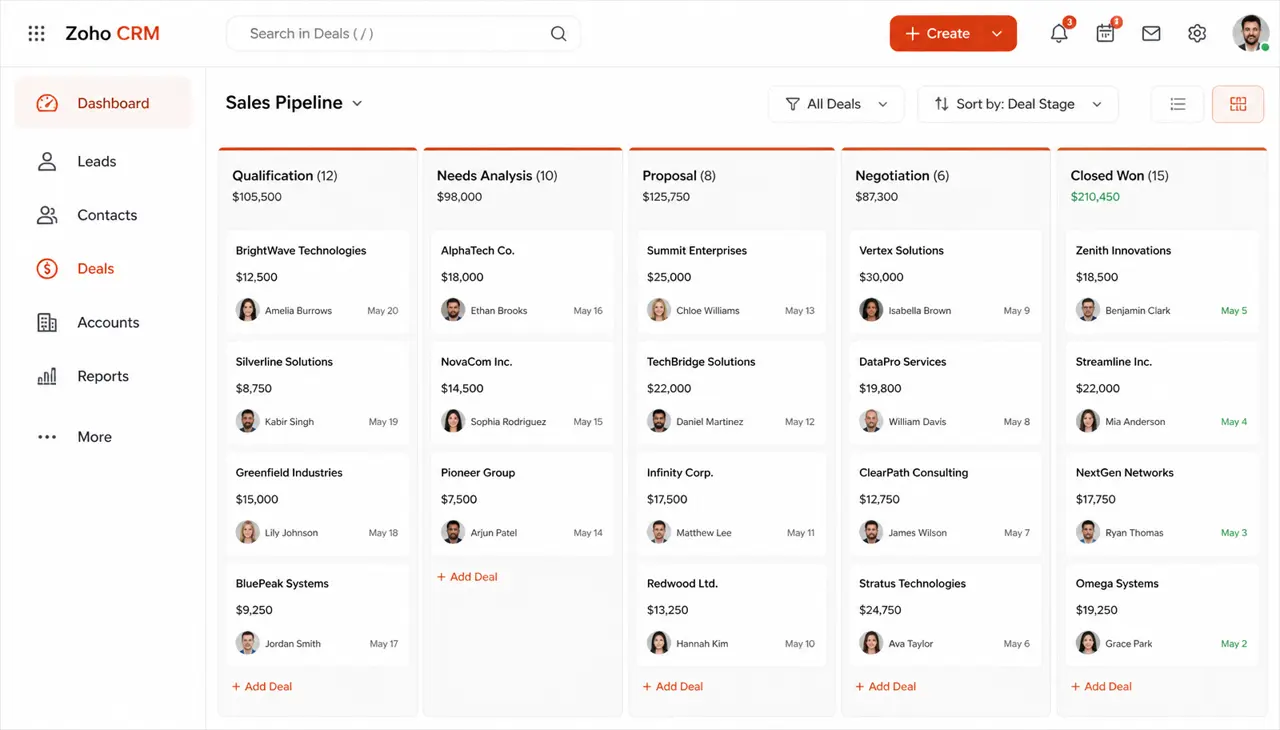
Zoho CRM Review 2026: Pricing, Features, and Real-World Verdict
By CRMWorldGuide Editorial • July 8, 2026Zoho CRM stays one of the best value CRMs on the market in 2026. Here is what works, what doesn't, and who should buy it.
Read More →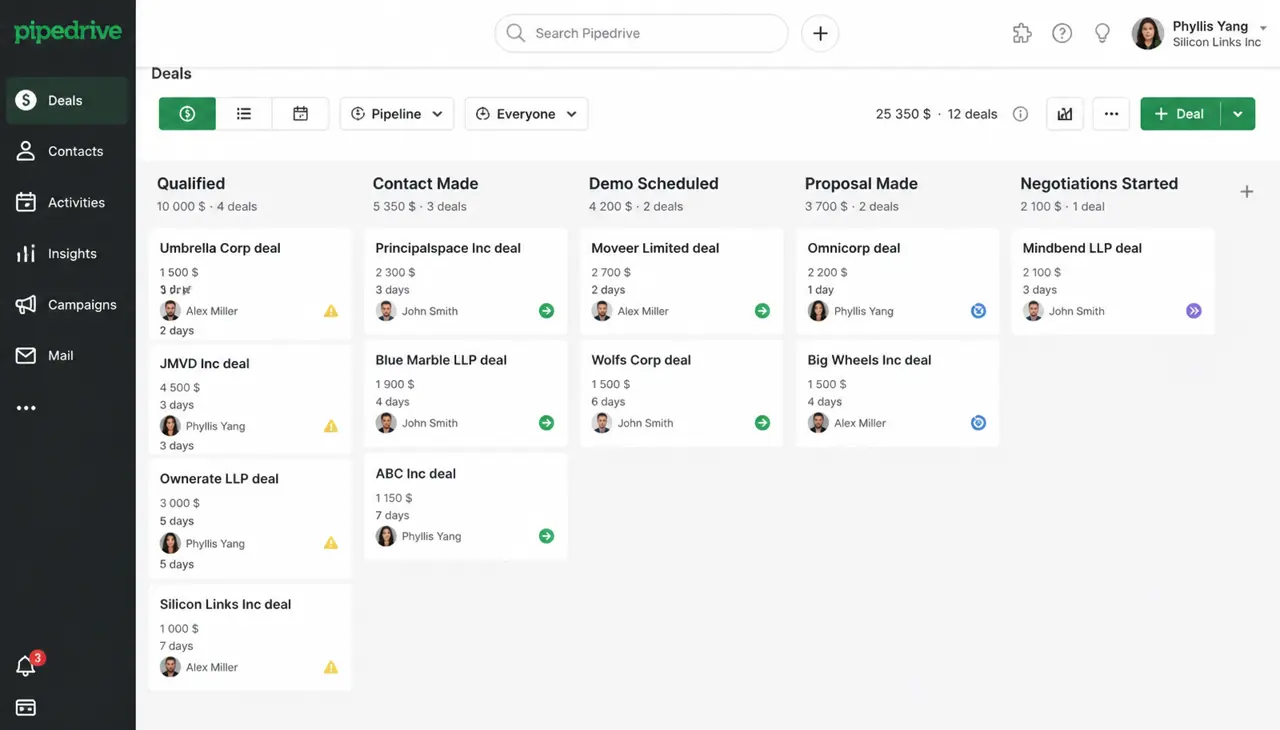
Pipedrive vs HubSpot 2026: Which CRM Fits Your Sales Team?
By CRMWorldGuide Editorial • July 8, 2026Pipedrive is built for salespeople; HubSpot is built for revenue teams. The right pick depends on how your pipeline works.
Read More →