Pipedrive vs HubSpot 2026: Which CRM Fits Your Sales Team?
For 2026 sales leaders, the choice between Pipedrive and HubSpot remains the central dilemma of small-to-midmarket CRM procurement. On one side, Pipedrive has doubled down on its 'sales-first' philosophy, refining an interface designed solely to keep account executives focused on high-velocity closing. On the other, HubSpot has transformed into a comprehensive 'Customer Platform' powered by its upgraded Breeze AI, seeking to unify marketing, sales, service, and operations into a single source of truth. The decision today isn't just about price; it is a strategic choice between a specialized tool optimized for the individual rep's daily workflow and an integrated ecosystem designed for executive-level visibility and multi-departmental alignment. This review breaks down our hands-on testing of both platforms' 2026 iterations to help you decide where to deploy your capital.
The Financial Reality: 2026 Pricing Structures
Pricing in the CRM space has shifted significantly toward consumption-based models and AI add-on fees. HubSpot remains the more complex of the two, often requiring a dedicated operations manager to navigate seat types and portal limits. Pipedrive maintains its per-user transparency but has introduced 'Power' and 'Enterprise' tiers to accommodate larger teams that need advanced governance and security. While HubSpot offers a robust free tier, the 'HubSpot Tax'—the steep price jump from Starter to Professional—is still very real for growing businesses. Below is a breakdown of the current market rates for these platforms.
| Plan Level | Pipedrive (Per User/Mo) | HubSpot Sales Hub (Per Seat/Mo) |
|---|---|---|
| Entry Level | $24 (Essential) | $15 (Starter - Limited Features) |
| Mid-Tier | $59 (Professional) | $110 (Professional - 5 seat min) |
| Scale-Tier | $94 (Power) | $150 (Professional + AI Add-ons) |
| Enterprise | $129 (Enterprise) | $500+ (Enterprise - 10 seat min) |
Pipedrive's Strengths: The Closer's Choice
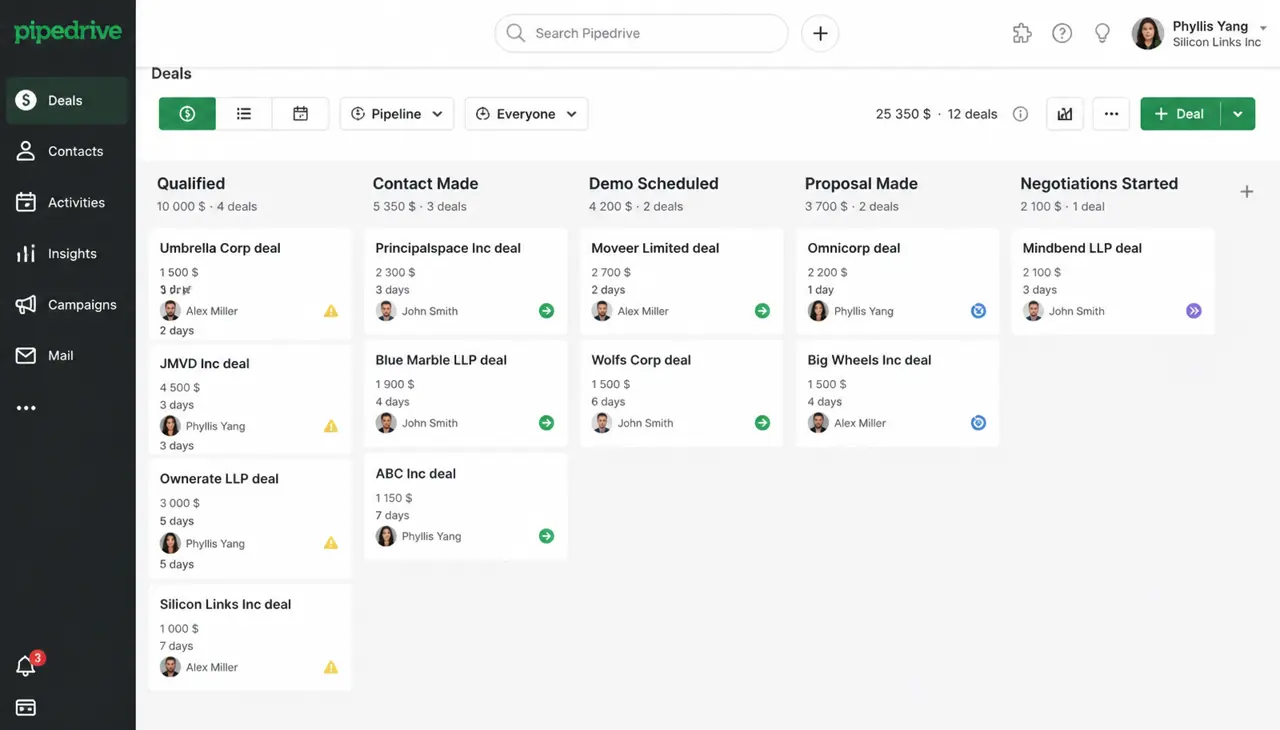
Pipedrive’s 2026 update reinforces its position as the most intuitive visual pipeline on the market. Unlike HubSpot, which can feel bloated with marketing tools, Pipedrive is lean. It excels at activity-based selling—the philosophy that you can't control outcomes, only the actions that lead to them. The interface minimizes clicks, allowing reps to move deals, log calls, and schedule follow-ups within seconds. Their recent 'Project' management integration allows for a seamless handoff from sales to fulfillment without leaving the CRM environment, a massive win for service-based agencies and construction firms.
- Visual Pipeline Management: The drag-and-drop interface remains the industry gold standard for clarity.
- Sales Assistant AI: Proactive 'nudges' that identify which deals are rotting and which need immediate outreach.
- Revenue Forecasting: Simplistic but highly accurate forecasting models based on historical win rates.
- Native LeadBooster: A built-in chatbot and web forms suite that funnels intent directly into the pipeline.
- Low Learning Curve: Most new hires can become proficient in Pipedrive in under two hours without formal training.
Pipedrive is built to get out of the salesperson's way, while HubSpot is built to keep the executive's data organized.
HubSpot's Strengths: The Ecosystem Powerhouse
HubSpot is no longer just a CRM; it’s a data operational engine. In 2026, its 'Breeze AI' functionality provides deep intelligence that Pipedrive simply can't match. HubSpot can tell you not just who is in your pipeline, but which marketing whitepaper they downloaded three months ago, which support tickets they currently have open, and what their sentiment score is based on recent email interactions. For companies with a complex, multi-touch buyer’s journey, this 360-degree view is invaluable. Its automation engine, 'Workflows,' allows for sophisticated logic that can trigger actions across the entire business suite.
- Unified Data Schema: Seamless connectivity between marketing, sales, service, and content tiers.
- Advanced Sequences: Highly customizable automated email and task cadences that feel personalized.
- Custom Objects: The ability to track literally anything (e.g., shipments, properties, subscriptions) within the CRM.
- Breeze AI: Generative AI tools that assist in drafting emails, summarizing meetings, and predictive lead scoring.
- Reporting Depth: A massive library of pre-built reports and a custom report builder for granular data visualization.
Weaknesses and Trade-offs
No CRM is perfect, and both platforms have areas where they struggle to meet certain buyer demands. Pipedrive's simplicity, while its greatest asset, is also its ceiling. Large multi-national corporations often find its reporting lacks the depth required for complex territory management or split commissions. Conversely, HubSpot's greatest weakness is its 'feature creep' and pricing structure. It is very easy to start at $15/month and find yourself paying $2,000/month eighteen months later as you add seats and 'Hubs.' The platform can also feel overwhelming for a three-person shop that just wants to track simple phone calls.
- Pipedrive: Limited marketing automation compared to HubSpot's robust Marketing Hub.
- Pipedrive: Integration with third-party tools is often required for even basic customer support tickets.
- HubSpot: The 'Professional' tier pricing jump is one of the most aggressive in the SaaS industry.
- HubSpot: The interface can be cluttered with tabs and options that sales reps will never actually use.
- Both Platforms: Both have increasingly moved toward locking advanced 'AI' features behind their most expensive paywalls.
Integration and Ecosystem Comparison
In the 2026 landscape, your CRM must talk to your accounting, communication, and project management tools. HubSpot wins on sheer volume with over 1,500 integrations in its Marketplace. Because of HubSpot's market share, third-party developers build for them first. However, Pipedrive’s Marketplace is more curated and easier to navigate. Pipedrive’s integration with tools like Slack, Trello, and Zoom is robust and rarely breaks. For US-based businesses using QuickBooks or Xero, both platforms offer solid syncing, but HubSpot’s ability to pull in 'Line Items' and generate actual invoices from the CRM is slightly more mature than Pipedrive's native billing integrations.
Real-World Use Cases: Finding Your Fit
If you are running a 10-person outbound sales agency in Austin or a Boutique Real Estate firm where the rep is the king, Pipedrive is your best bet. It honors the 'hustle' by making data entry painless. We found that reps using Pipedrive tend to log 25% more activities because they aren't fighting the software. On the flip side, if you are a B2B SaaS startup or an established manufacturing firm needing to align a 50-person marketing team with a 20-person sales team, HubSpot is the better investment. The 'Sales-Marketing alignment' isn't just a buzzword in HubSpot; it's a structural reality because both teams share the exact same contact records and timeline.
Direct Competitor Comparison
| Feature | Pipedrive | HubSpot | Best For |
|---|---|---|---|
| Ease of Use | High | Moderate | Pipedrive |
| AI Capabilities | Basic/Helpful | Advanced/Predictive | HubSpot |
| App Ecosystem | Solid (400+) | Dominant (1,500+) | HubSpot |
| Automations | Simple Triggers | Complex Workflows | HubSpot |
| Mobile App | Excellent | Good | Pipedrive |
Frequently Asked Questions
Can Pipedrive handle marketing emails like HubSpot?
Pipedrive has a 'Campaigns' add-on that handles basic email marketing, but it is not as sophisticated as HubSpot's Marketing Hub. It's great for simple newsletters but lacks HubSpot's deep behavioral triggering and advanced lead nurturing capabilities.
Is HubSpot actually 'Free'?
The free version is a great entry point for very small businesses, but it is heavily branded with 'Powered by HubSpot' logos and lacks crucial automation. Most growing US businesses will find they need to upgrade to at least the Starter or Professional tier within the first year.
Which CRM is better for a remote-first team?
Pipedrive often wins for remote teams due to its superior mobile app and focus on individual activity tracking. HubSpot is also capable but its complex interface can be harder to troubleshoot over a Zoom screen share compared to Pipedrive's simple board view.
Does Pipedrive offer AI call recording?
Yes, through its recent 'Sales Assistant' and marketplace integrations, it can transcribe and summarize calls. However, HubSpot's native 'Conversation Intelligence' is more deeply integrated into its reporting suite for coaching purposes.
How long does migration take between the two?
Migrating from Pipedrive to HubSpot is common and usually takes 2-4 weeks with a consultant. Moving from HubSpot back to Pipedrive is faster due to the simpler data structure, but you may lose complex historical marketing data in the process.
Final Verdict: The 2026 Choice
In 2026, the 'best' CRM is the one your sales team will actually use. If you have a lean team that needs to move fast, focus on high-volume outbound, and stay within a predictable budget, Pipedrive is our top recommendation. It is a scalpels-edge tool for sales professionals. However, if your business is scaling rapidly and needs to break down the silos between marketing, sales, and customer success, HubSpot is the unavoidable powerhouse. While the HubSpot 'ecosystem lock-in' and premium pricing are significant considerations, the value of having all customer data in one centralized, AI-enhanced repository usually outweighs the cost for mid-market American enterprises. Choose Pipedrive for velocity; choose HubSpot for scale.
Reader reviews
What US professionals said after reading this article.
Molly N.
Director of Logistics, 150-employee Freight Brokerage · Portland, OR
Our shipping floor needed clarity on why Pipedrive stays sales-first while others drift into general marketing. We are currently moving away from legacy spreadsheets and the activity-based approach described here matches our high-volume outreach style. It is helpful to see the 2026 pricing breakdowns before we commit our entire regional team to a new seat license.
Marta B.
Founder, 3-location HVAC company · Asheville, NC
Switching from a basic contact manager was weighing on my office staff. The section regarding onboarding time helped me realize that we do not have the internal resources to manage a year-long implementation. We need something that fits our small team immediately. This comparison confirms that Pipedrive is likely the pragmatic choice for our current growth phase.
Sofia G.
RevOps Manager, Series B fintech · Buffalo, NY
Data silos have been a persistent issue since our last funding round. Seeing the breakdown of HubSpot as a full customer platform confirms my suspicion that we need a unified database rather than a standalone sales tool. The analysis of how Breeze AI integrates across various hubs provides the specific technical validation my engineering team requested during our software audit.
Kevin E.
VP of Sales, 40-person MarTech startup · San Antonio, TX
Keeping my reps focused on the right activities is harder than it looks when your CRM is cluttered. Your assessment of how these tools fit different team sizes gave me a lot to think about for our Q3 planning. We are leaning toward the newer Breeze AI features to automate our prospecting, provided the implementation costs do not exceed the annual projection.
Dominic W.
Head of Growth, Specialty E-commerce Agency · Tacoma, WA
Deciding between these two platforms usually comes down to whether you want a specialized scalpel or a Swiss Army knife. My agency has been using a patchwork of tools for years and we are finally ready for a full customer platform. This guide clarifies the long-term value of the HubSpot ecosystem despite the higher entry price for the professional tiers.
Related articles

The 7 Best CRM Software Platforms for Small Business in 2026
 By CRMWorldGuide Editorial • July 8, 2026
We tested the seven most popular CRMs for US small businesses and ranked them by price, features, and real ease of use.
Read More →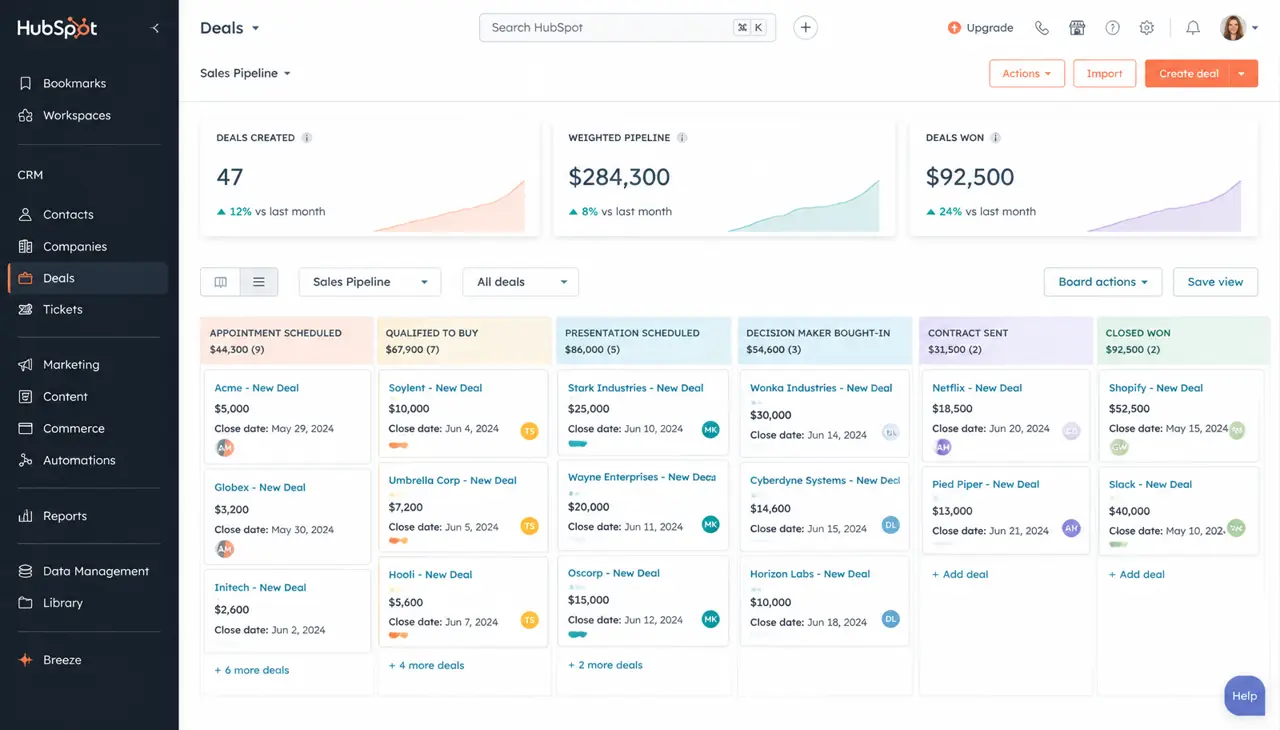
HubSpot Review 2026: Is It Still Worth the Price?
By CRMWorldGuide Editorial • July 8, 2026HubSpot's pricing keeps climbing. After running it live for a year across three client accounts, here's whether it still delivers.
Read More →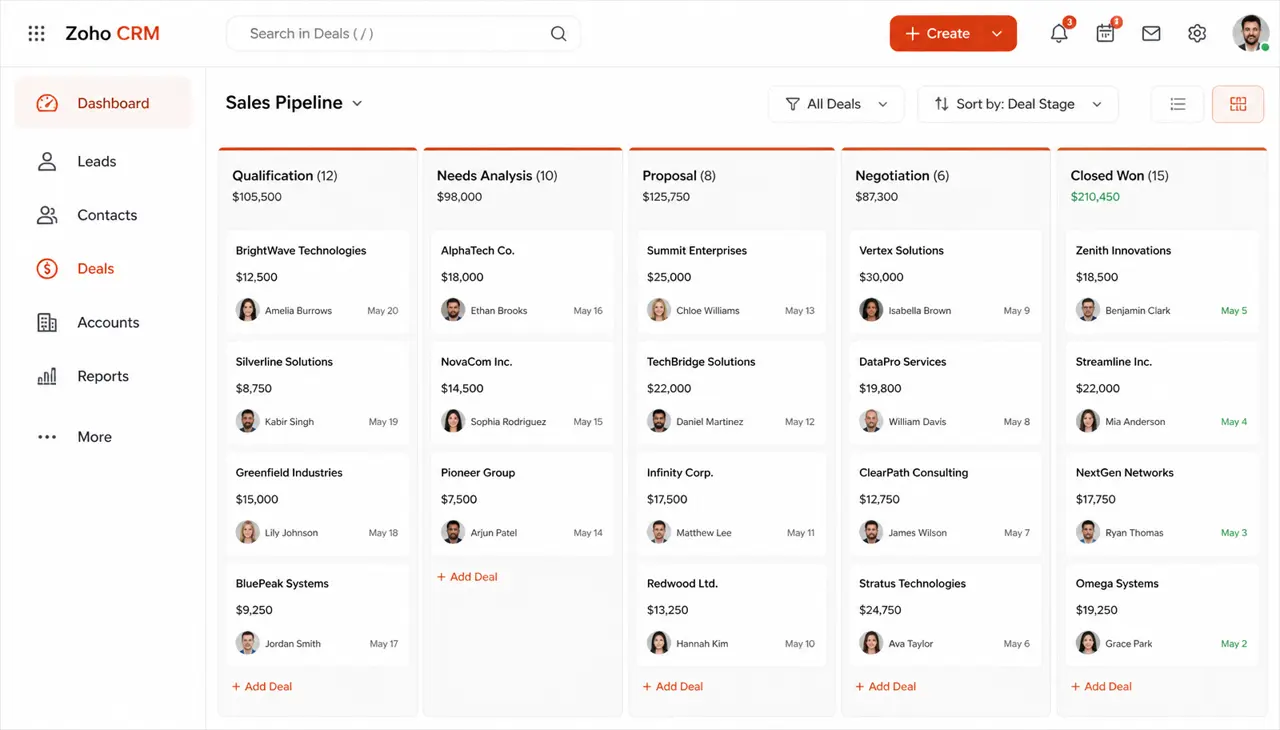
Zoho CRM Review 2026: Pricing, Features, and Real-World Verdict
By CRMWorldGuide Editorial • July 8, 2026Zoho CRM stays one of the best value CRMs on the market in 2026. Here is what works, what doesn't, and who should buy it.
Read More →