HubSpot vs Pipedrive in 2026: Which CRM Actually Fits Your Sales Team?

HubSpot and Pipedrive are the two CRMs we recommend most often to US small and mid-market sales teams, and the two we see confused most often. HubSpot is a marketing-first platform that grew a serious sales product. Pipedrive is a sales-first pipeline tool that added marketing later. In 2026 both are excellent, and the right choice depends less on features than on the shape of your revenue team.
Pricing side-by-side
| Plan | HubSpot Sales Hub | Pipedrive |
|---|---|---|
| Entry paid plan | $20/user/month | $14/user/month |
| Automation tier | $100/user/month (Pro) | $34/user/month (Professional) |
| Enterprise tier | $150+/user/month | $79/user/month (Power/Enterprise) |
| Free plan | Yes, unlimited users | 14-day trial only |
Pipeline management
Pipedrive wins on pipeline UX. Its kanban view is genuinely the fastest way to move deals we have tested in 2026, and rep adoption is consistently higher than competing tools. HubSpot's pipeline is more polished but slightly heavier — the trade-off you make for a broader platform.
Automation and reporting
HubSpot pulls decisively ahead once you need marketing automation, lead scoring, or attribution reporting. Pipedrive's automation is powerful but oriented around sales workflow, not multi-channel campaigns. If you plan to run content marketing, paid ads, and nurture sequences from the same platform as your CRM, HubSpot is the more natural fit.
Integrations
- Both integrate with Google Workspace, Microsoft 365, Slack, Zoom, and QuickBooks.
- HubSpot has a materially larger app marketplace, especially for marketing and CMS tools.
- Pipedrive's ecosystem is deeper in sales-adjacent tools: prospecting, dialers, and proposal software.
- Both support Zapier and Make natively for long-tail integrations.
- HubSpot has stronger native reporting; Pipedrive relies more on third-party BI connectors.
Which one for which team?
Choose Pipedrive if you have a small, disciplined outbound or inbound sales team focused on pipeline velocity, and marketing lives in a separate tool. Choose HubSpot if marketing, sales, and support share the same funnel and you want a single system of record for the entire customer journey. For US teams growing past 25 sales seats and running serious content marketing, HubSpot is almost always the better long-term bet, despite the higher price.
Pipedrive is the CRM your reps will actually open. HubSpot is the CRM your CMO will actually love. Choose which mattered more this year.
FAQ
Is HubSpot really that much more expensive?
At the entry level, no — the $20 Starter plan is comparable to Pipedrive. The gap opens at Professional, where HubSpot's $100/user/month plan includes marketing automation Pipedrive charges separately for.
Can I migrate from Pipedrive to HubSpot later?
Yes, both platforms offer well-documented import tools and there is a healthy partner ecosystem for migrations. Expect a 2-4 week project for a team of 25.
Which has better AI features in 2026?
HubSpot has invested more heavily in AI-generated content and pipeline insights. Pipedrive's AI is narrower but arguably more useful day-to-day for individual reps.
Editorial verdict
Both CRMs are excellent 2026 choices. If your future looks like a unified revenue org with marketing, sales, and support in one place, buy HubSpot. If your future looks like a focused sales team optimizing pipeline velocity, buy Pipedrive. Either way, invest in adoption — the CRM your team uses beats the CRM with better slides.
Related articles

The 7 Best CRM Software Platforms for Small Business in 2026
 By CRMWorldGuide Editorial • July 8, 2026
We tested the seven most popular CRMs for US small businesses and ranked them by price, features, and real ease of use.
Read More →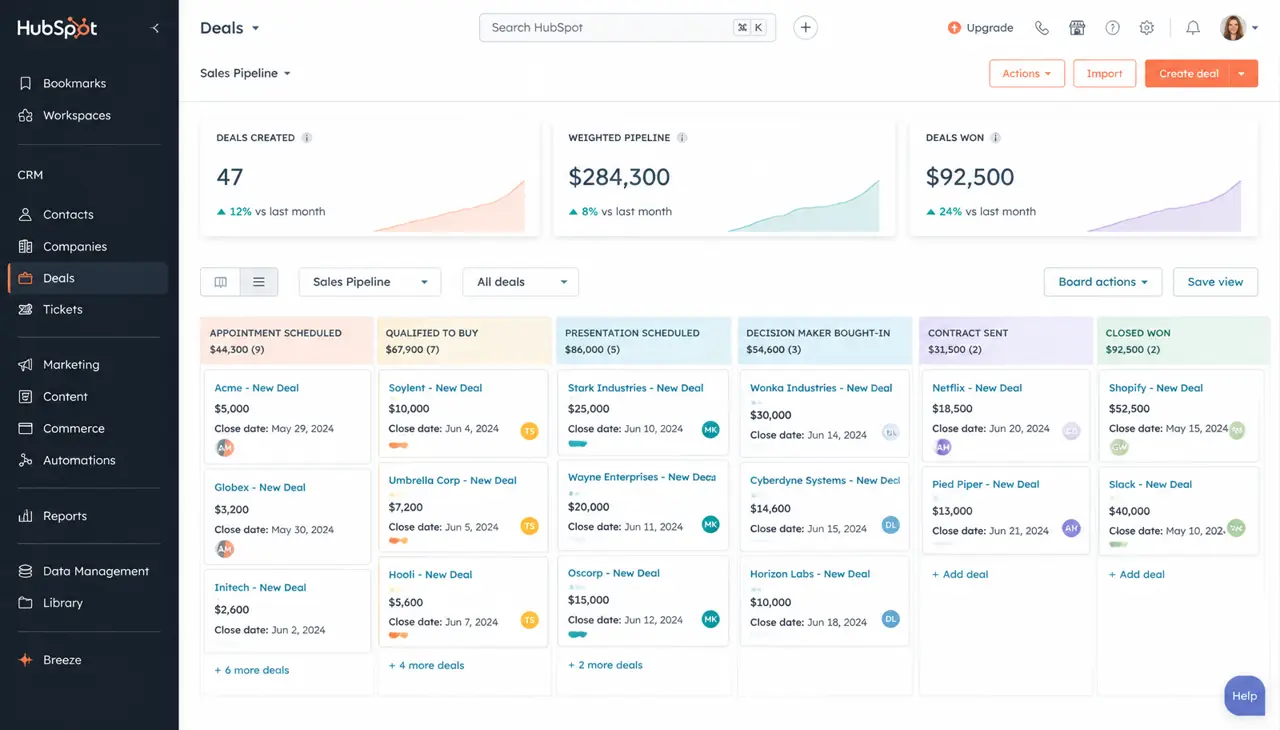
HubSpot Review 2026: Is It Still Worth the Price?
By CRMWorldGuide Editorial • July 8, 2026HubSpot's pricing keeps climbing. After running it live for a year across three client accounts, here's whether it still delivers.
Read More →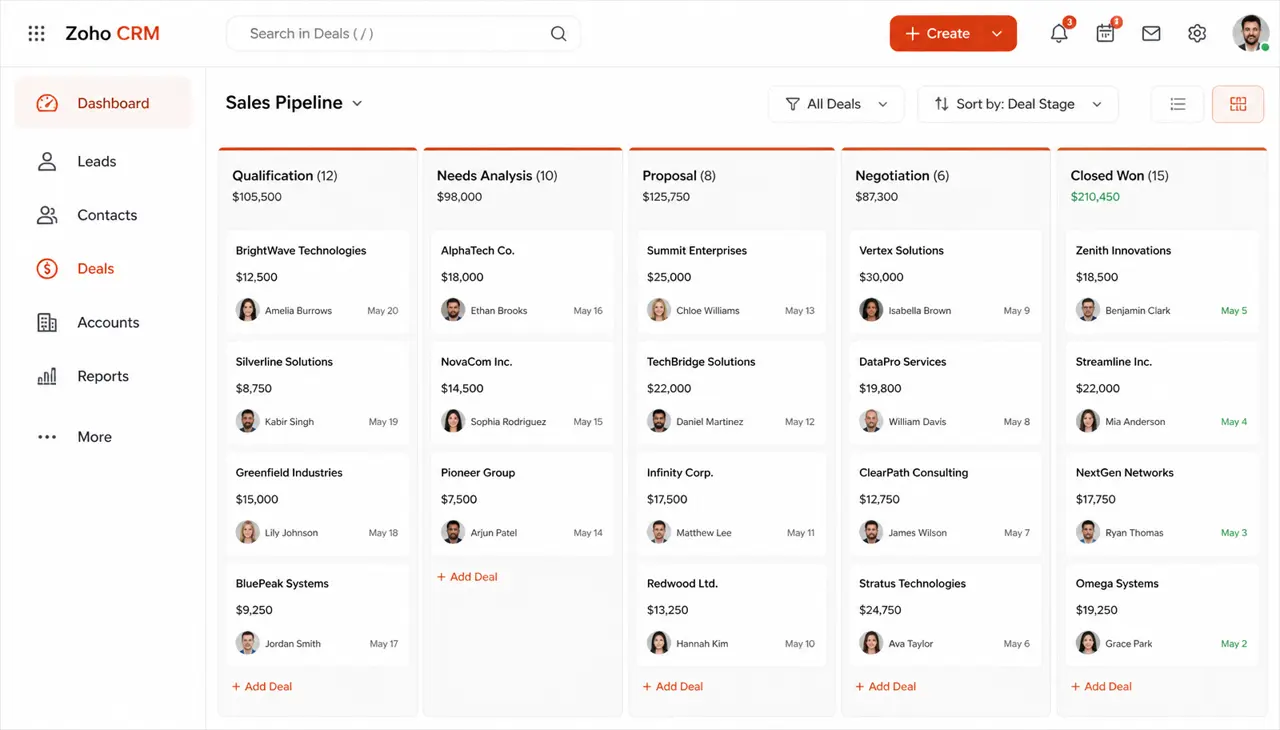
Zoho CRM Review 2026: Pricing, Features, and Real-World Verdict
By CRMWorldGuide Editorial • July 8, 2026Zoho CRM stays one of the best value CRMs on the market in 2026. Here is what works, what doesn't, and who should buy it.
Read More →