Monday Sales CRM Review 2026: When Cross-Team Visibility Wins
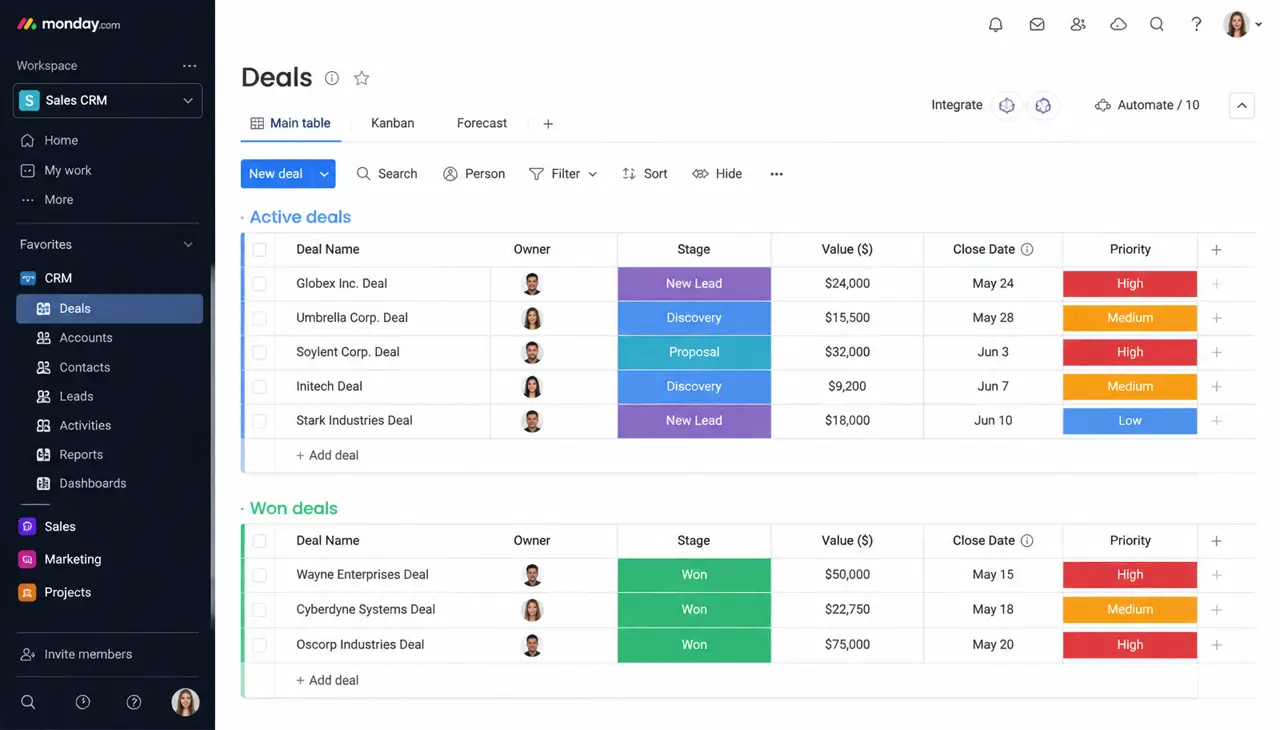
For American sales leaders in 2026, the traditional silo between lead generation and project fulfillment is no longer just a minor annoyance; it is a significant revenue leak. Monday Sales CRM has aggressively pivoted from a generalist project management tool into a specialized, high-velocity sales engine designed for organizations where transparency is a competitive advantage. Unlike legacy platforms like Salesforce that often require a dedicated administrator just to adjust a field, Monday Sales CRM leverages a familiar low-code architecture that allows operations managers to bridge the gap between initial contact and final delivery. This review examines how the platform handles modern pipeline management, its performance in a data-heavy market, and whether the 2026 feature updates justify its position as a primary hub for mid-market B2B enterprises looking to scale without bureaucratic friction.
Understanding the 2026 Pricing Structure
Monday.com has refined its pricing model for the CRM product to better reflect the enterprise-grade features rolled out over the last eighteen months. While there is a perpetual 'Basic' tier, most professional sales teams will find themselves looking at the Pro or Enterprise tiers to unlock critical automation and integration limits. The 2026 pricing reflects a slight upward trend in seat costs, balanced by the inclusion of advanced AI-driven forecasting and native e-signature capabilities that previously required third-party subscriptions. It is important to note that billing is typically structured in seats of three, five, or ten, which can be a point of contention for smaller boutique agencies needing an exact number of licenses. Organizations should also budget for the 'CRM' add-on cost if they are already utilizing Monday.com for project management.
| Plan Tier | Monthly Cost (Per Seat/Annual) | Key Features |
|---|---|---|
| Basic CRM | $15 | Unlimited pipelines, Lead capture, Mobile app |
| Standard CRM | $22 | Email integration, Quotes/Invoices, 250 automation actions |
| Pro CRM | $38 | Forecasting, Google Calendar sync, 25,000 automation actions |
| Enterprise CRM | Custom Pricing | Advanced security, Multi-level permissions, HIPAA compliance |
Core Strengths: Where Monday Sales CRM Outshines the Competition
The primary differentiator for Monday Sales CRM is its unparalleled visual flexibility. While platforms like Pipedrive focus strictly on the linear deal, Monday allows for a multidimensional view of the customer journey. Sales operations teams can toggle between Kanban boards, Gantt charts for long-cycle implementations, and high-level dashboards in a single click. In 2026, the platform's 'Pulse' technology has evolved to handle massive data sets without the lag times that plagued earlier iterations. The automation builder remains the gold standard for non-technical users, allowing for complex 'if-this-then-that' logic that connects CRM data to marketing and finance boards instantly. This creates a closed-loop system where a 'Closed Won' status automatically triggers a project kickoff board for the delivery team.
- Unified Cross-Board Automation: Automatically notify project managers or billing departments when a deal reaches a specific stage, reducing manual hand-off errors.
- Deep Email Integration: Full two-way sync with Outlook and Gmail that includes automated sequence tracking and AI-generated follow-up suggestions based on lead sentiment.
- Intuitive Document Generation: Native ability to generate professional quotes, contracts, and invoices directly from deal data without leaving the CRM environment.
- Customizable Dashboards: Drag-and-drop widgets for real-time tracking of team KPIs, individual performance, and weighted pipeline forecasting.
- Centralized Communication: A singular thread for every lead that captures emails, internal notes, and meeting recordings, ensuring no data loss during staff turnover.
Weaknesses and Operational Trade-Offs
Despite its rapid evolution, Monday Sales CRM is not a silver bullet for every organization. Its greatest strength—flexibility—can also be its greatest weakness. Without a strong internal advocate to set up and enforce data entry standards, the CRM can quickly become a cluttered mess of mismatched boards and redundant columns. Furthermore, while the platform has added sophisticated reporting, it still lacks some of the deep, multi-layered financial modeling found in Oracle Netsuite or Salesforce. Larger enterprises with hyper-complex hierarchical structures may find the permission-level management slightly less granular than required for global security compliance. Additionally, the seat-based pricing bundles can result in 'ghost' costs for teams that fall between the standard increments.
- Setup Complexity: The blank-slate nature of the boards means teams must invest significant time in initial configuration to see real ROI.
- Automation Caps: Lower-tier plans have strict limits on 'actions' per month, which can catch growing teams off guard and force untimely upgrades.
- Reporting Limitations: Advanced trend analysis and year-over-year cohort studies sometimes require external BI tools or the highest Enterprise tier.
- Rigid Seat Bundles: You cannot buy a single seat; you must buy in fixed blocks (e.g., 5, 10, 15), which complicates budgeting for small teams.
Monday Sales CRM isn't just a place to store contacts; it's an operational heartbeat for companies that refuse to let their sales data live in a vacuum.
Integrations and the Modern Ecosystem
In 2026, a CRM is only as good as its ability to communicate with the rest of your tech stack. Monday Sales CRM excels here, offering over 200 native integrations and a robust API for custom builds. For US-based sales teams, the seamless connection to Slack, Microsoft Teams, and Zoom is non-negotiable, and Monday delivers with real-time notifications and automated meeting logging. The integration with marketing platforms like HubSpot and Mailchimp is particularly strong, allowing for lead attribution data to flow directly into the sales pipeline. Furthermore, the 2026 update to the Monday Marketplace has introduced specialized 'apps' developed by third-party vendors for niche industries like real estate and medical device sales, extending the platform's utility far beyond basic lead tracking.
Real-World Use: Who Should Invest?
This platform is the ideal choice for mid-market B2B companies with 20 to 500 employees where the sales process is consultative and involves multiple internal stakeholders. We specifically recommend it for professional services, creative agencies, and software startups. In these environments, the 'Closed Won' status is just the beginning of the client relationship, and Monday’s ability to transition a lead into a project board is a game-changer. Conversely, high-volume B2C retail businesses or micro-businesses with basic contact management needs might find the interface overkill and the pricing prohibitive compared to simpler solutions like Zoho or Freshsales.
Alternative Comparison: How it Stacks Up
| Feature | Monday Sales CRM | Salesforce | HubSpot Sales Hub |
|---|---|---|---|
| Ease of Use | High (Visual Leader) | Low (Requires Admin) | High (Clean UI) |
| Customization | Excellent (Low-code) | Extreme (Code-heavy) | Moderate |
| Post-Sale Workflow | Native Inclusion | Requires separate Cloud | Requires Ops Hub |
| Ideal For | Cross-team Collaboration | Global Enterprise | Inbound Marketing Leads |
Frequently Asked Questions
Can I migrate my data from Salesforce to Monday Sales CRM easily?
Yes, Monday offers a dedicated Salesforce import tool that maps standard fields like leads, contacts, and opportunities. In 2026, the mapping engine has improved to recognize custom fields, though many teams still utilize a consultant to ensure complex relational data remains intact during the transition.
Does Monday Sales CRM include a built-in dialer?
While Monday does not have a native VOIP service, it features deep integrations with Aircall, RingCentral, and CloudTalk. These integrations allow for click-to-dial functionality directly from the board and automatic call logging with transcription within the lead's activity timeline.
Is the mobile app functional for field sales reps?
The 2026 mobile app update is significantly more robust than previous versions. It supports offline editing, geo-tagging for site visits, and a simplified 'Day at a Glance' view. It is particularly effective for viewing pipelines and updating status on the go, though complex board building is still best done on a desktop.
How does Monday handle lead scoring?
Lead scoring is managed through a combination of formula columns and the new 'AI Predict' widget. By analyzing historical data from past deals, the system assigns a probability score to new leads based on industry, company size, and engagement levels, helping reps prioritize their daily outreach.
The 2026 Verdict
Monday Sales CRM has solidified its place as a top-tier contender in the 2026 CRM landscape. It has successfully moved past its reputation as a 'glorified spreadsheet' to become a legitimate, data-driven sales operations platform. For the American business looking to eliminate the friction between sales and execution, its value proposition is hard to beat. While larger enterprises might still lean toward the sheer power of Salesforce, and marketing-first teams might prefer HubSpot, Monday is the clear winner for organizations that value visibility, agility, and cross-departmental harmony. It is a strategic investment that, when implemented correctly, transforms the CRM from a record-keeping chore into a central hub for growth.
Reader reviews
What US professionals said after reading this article.
Lorena C.
Director of Operations, Regional Logistics Group · Oklahoma City, OK
Moving our fleet management team onto the same platform as sales was our main priority this quarter. The breakdown of the board-based pipeline clarifies how we can track vehicle procurement alongside client contracts. We previously used Excel for this, but the visual cues mentioned here convinced me to start the trial for our twelve-person office. It seems intuitive enough for everyone.
Anthony I.
Founder, 4-location HVAC Services · Houston, TX
Our technicians often felt disconnected from the initial sales promises made to homeowners. Seeing how the cross-team dashboards function helps me visualize a bridge between our field quotes and the final installation schedule. We are currently evaluating whether to ditch our legacy industry software for this more integrated approach. The reporting flexibility described fits our current need for better transparency.
Rosa N.
RevOps Manager, Series B Fintech · Sacramento, CA
Managing high-growth sales teams requires more than just a contact list, so the tie-in with monday work management is a significant draw for our developers. We need a way to push closed-won deals directly into product implementation boards. Most CRMs keep those departments in separate silos. This overview provides a clear argument for centralizing our data architecture to reduce manual handoffs.
Will T.
VP of Sales, 50-person MarTech Firm · Savannah, GA
Transitioning from a heavy enterprise platform like Salesforce is a daunting prospect for my mid-market reps. Your analysis of the board-based interface highlights exactly why my team finds this setup less intimidating. We need to maintain high adoption rates while scaling our lead volume. The simplicity of the drag-and-drop system seems like it would solve our current data entry bottlenecks immediately.
Michelle V.
Head of Business Development, National Consulting Agency · Dallas, TX
Reliable data visualization remains my biggest challenge when reporting to the board each month. Your section on cross-team dashboards mirrors exactly what we have been searching for to align our marketing spend with actual revenue. We are migrating eighty users next month. Having a single source of truth for both project tasks and sales goals will likely save us hours of reconciliation.
Related articles

The 7 Best CRM Software Platforms for Small Business in 2026
 By CRMWorldGuide Editorial • July 8, 2026
We tested the seven most popular CRMs for US small businesses and ranked them by price, features, and real ease of use.
Read More →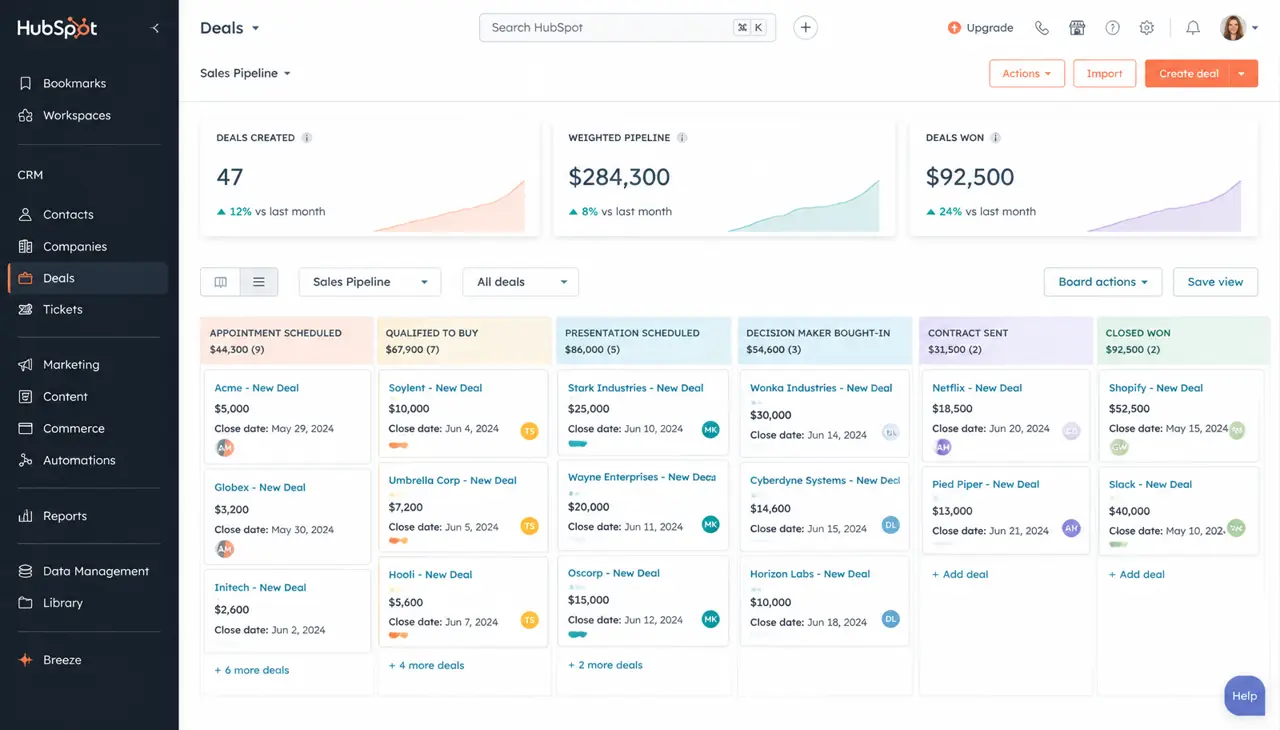
HubSpot Review 2026: Is It Still Worth the Price?
By CRMWorldGuide Editorial • July 8, 2026HubSpot's pricing keeps climbing. After running it live for a year across three client accounts, here's whether it still delivers.
Read More →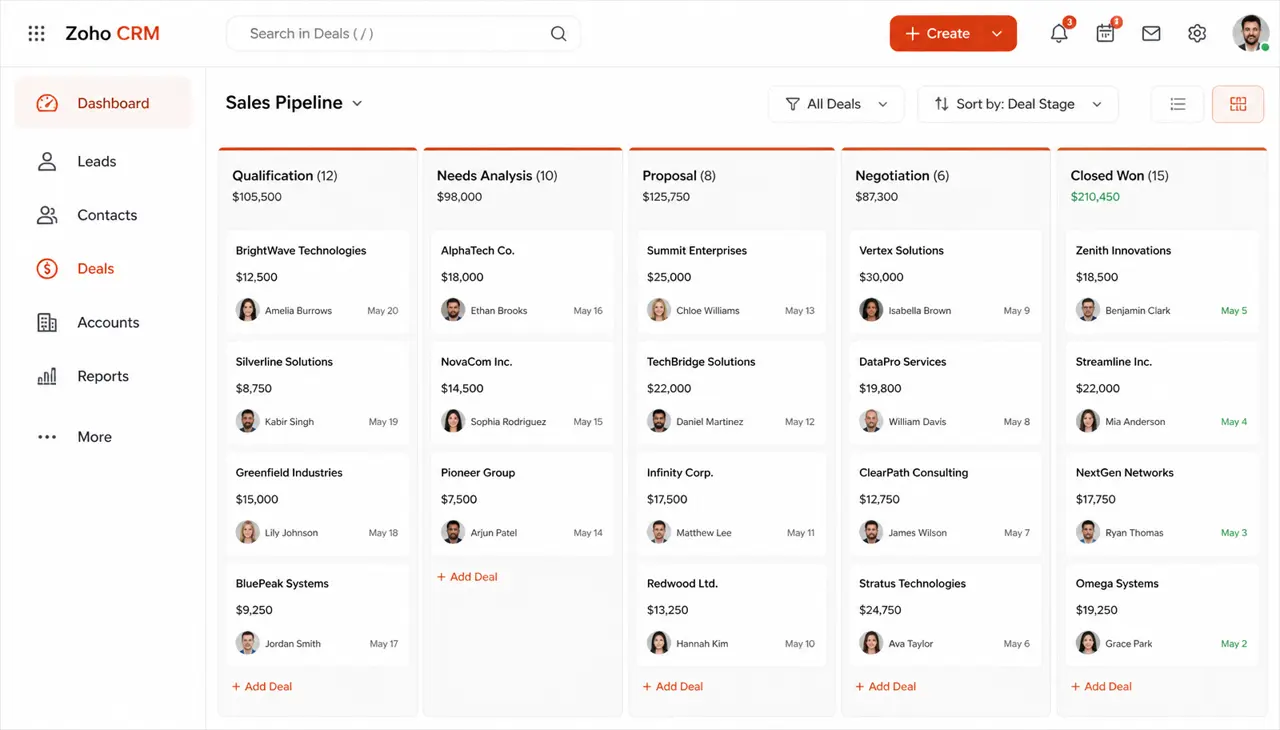
Zoho CRM Review 2026: Pricing, Features, and Real-World Verdict
By CRMWorldGuide Editorial • July 8, 2026Zoho CRM stays one of the best value CRMs on the market in 2026. Here is what works, what doesn't, and who should buy it.
Read More →